 Conselit
Agentic development without losing control of your product
In a world where agents can write most if not all of your code, everybody struggles with the same thing: how to use that power without losing control of your product, on green-field products as well as legacy applications. The process below explains how I do that.
This whole process starts from four things I believe.
- Belief 1 The agent writes better code than you, and faster. Stop writing it.
- Belief 2 Agents write too much code to review by hand, and you lose the skill once you stop writing it.
- Belief 3 If you don't use agents, a team that does will outrun you.
- Belief 4 As long as you prompt the agent yourself, you can do two or three things at once. No more.
All of this comes from building Cockpit, my own product in production, and from leading an engineering team on a legacy application from Q4 2025 to Q3 2026.
Cockpit in numbers
Three pages. Pick one to start.
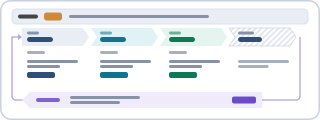 Page 1Deciding what to build
How strategy becomes work a team can pick up
Strategy, roadmap and shaping, with the product team around them and the same learning loop as engineering. Each step links to the argument behind it.
See the flow →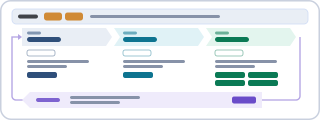 Page 2Building it
How a team builds, reviews and ships a feature
Scoping, the engineering plan, and building with its tests and reviews. Around it: the engineering team, what it costs, and how agents learn.
See the flow →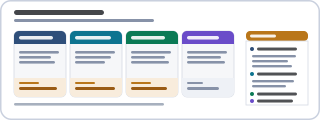 Page 3Adopting it on a legacy application
Where to start on a legacy codebase
Four phases, in the order that pays. Find yours, and see what to set up first and what to do with every change.
See where to start →Most advice you find online on agentic development stays high level, goes deep on one area only, or only works on a new codebase. I wanted to do it differently.
- The whole process. From strategy and roadmap to scoping, building, reviewing and shipping.
- Legacy codebases. A route for the codebase you already have, not only for a fresh start.
- Every role. What changes for engineers, product managers and QA, and for the team around them.
- All the details. The engineering recommendations link to the skills, checks and CI/CD pipelines I use to build Cockpit, so you see exactly how it is set up.